When you hear the words "protein powder", you might picture muscle-bound gym-goers who lift heavy weights. But protein powders aren't just for those with bodybuilding goals — they're for anyone who wants to feel stronger, recover better, and support their overall health.
Whether you're brand new to exercise, getting back into training in your 30s or 40s, or simply looking for a more convenient way to hit your daily protein targets, there's a powder for you. Here's our complete guide to protein powders for beginners.
- What is protein powder?
- What are the benefits of protein powder?
- How much protein do you need?
- What are the different types of protein powder?
- Which protein powder is best for beginners?
- Which protein powder is best for my goals?
- Frequently asked questions
What is protein powder?
Protein powder is a supplement made by extracting protein from various sources. Historically, the most popular form is whey, but it can also be made from egg white, soy or pea. Whey protein blends featuring other protein sources, such as milk protein or collagen, are also becoming increasingly popular.
During its production, the carbohydrates, fats and minerals are removed, leaving pure protein. Nutrients, flavourings and other ingredients may then be added.
The final product is a powder that can be rehydrated with milk or water, or even added to recipes. They come in a variety of flavours, including plain, and can cater to a range of dietary or lifestyle needs.
What are the benefits of protein powder?
Everyone needs protein. Most of the time, you can get enough of it from your diet. But sometimes you might not be able to get enough or just don't have the time to whip up a protein-packed meal. That's where protein powders come in handy.
Most protein powders are complete proteins, meaning they give your body all the essential amino acids it needs. But they offer more than just nutrition, and can have a host of other perks:
Weight management
Protein is highly satiating, meaning it fills you up quickly and keeps you feeling fuller for longer. This makes it ideal for anyone who is looking to manage their weight.
Muscle growth
Protein is crucial for building muscle. A review of 49 studies found that protein supplementation significantly improved the size and strength of muscles in healthy adults who did resistance training, like lifting weights.1
Recovery after exercise
When you exercise, you create microtears in your muscles. Once healed, your muscles become stronger. To support this repair, you need to consume protein.2
Convenient
Protein powder is easy and quick to use — just mix it with milk or water. It's perfect for post-workout refuelling, breakfast, or snacks.
Plus, if you're new to using it, you won't have to stress over counting macros in your food — you'll know exactly how much is in each scoop of powder.
How much protein do you need?
In the UK, the recommendation for adults is 0.75g of protein per kg of body weight per day.3 That's about 55g per day for the average sedentary man and 45g per day for the average sedentary woman. The recommendation increases according to your activity level.
What are the different types of protein powder?
If you're looking to up your protein intake, you'll need to know the different types available. Here's a rundown of some of the most common:
Whey protein
A milk protein that's easily dissolved in water, whey protein is a long-time favourite among athletes and gym-goers for its convenience. It is a complete protein, meaning it contains all the amino acids your body needs, and is quickly and easily absorbed.
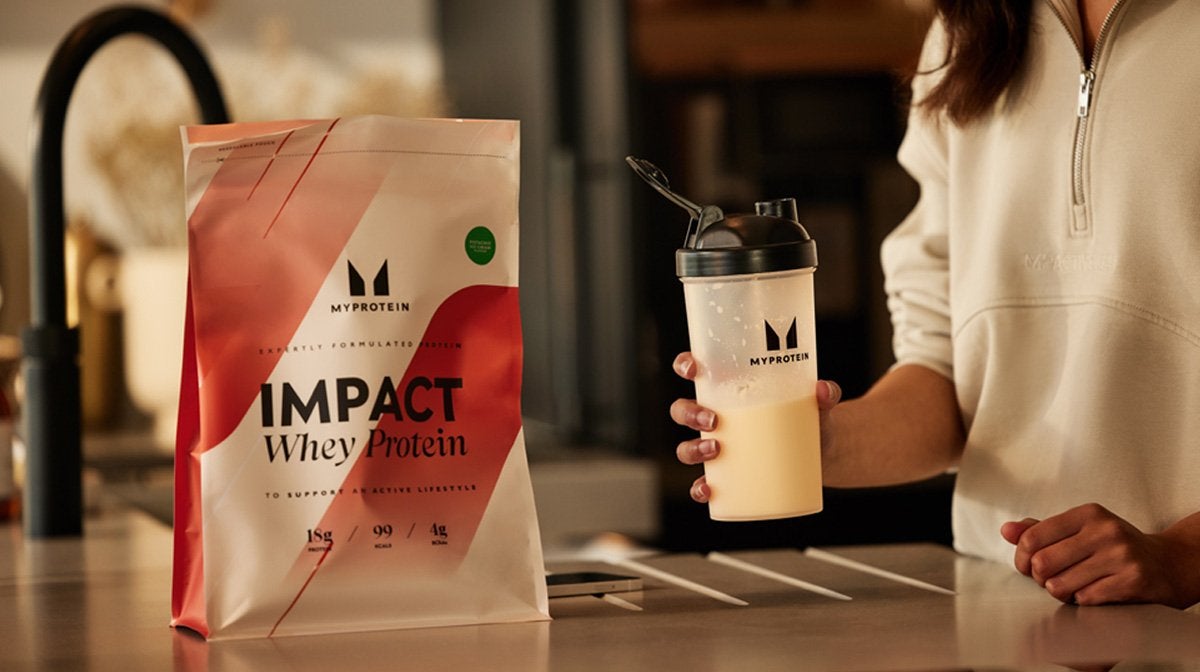
Options include Impact Whey Protein, the UK's and Europe's most popular whey protein powder, delivering 23g of protein per serving. You could also opt for Impact Whey Protein Milkshake, our creamiest whey protein ever, with 20g of protein per serving.
Whey isolate
Whey protein isolate is the ideal option for anyone who wants the benefits of whey's amino acid profile and high protein content but with a few less grams of fat.
Impact Whey Isolate is filtered more than whey concentrate, meaning most of the fat and lactose are removed in the filtration process. Each serving comes in at 109 calories, too, so it's a good option for anyone looking to boost their protein to support a weight loss journey.
Whey and collagen blends
A growing category that combines the muscle-supporting benefits of whey with collagen peptides. Collagen is the most abundant protein in the body — the building block of skin, hair, nails, joints, and connective tissue — and its natural production begins to decline from your mid-20s.
A whey and collagen blend is a practical option for anyone who wants to support both muscle and connective tissue, particularly if aches and pains after new exercise are a concern.
Impact Whey + Collagen delivers 20g of protein and 10g of bovine collagen peptides (Type I) per serving, alongside vitamin C, which contributes to normal collagen formation for the normal function of cartilage.
Clear protein
Clear Whey Protein, made from high-quality hydrolysed whey protein isolate, has all the benefits of a complete amino acid profile and high protein content while being a light and refreshing shake.
Ideal for summer and anyone who struggles to get a creamy shake down before or after working out.
Soy protein
If you're avoiding dairy, then Impact Soy Protein, made from soybeans, is a great plant-based alternative. Like whey, soy is a complete protein.
Casein
Another dairy-based protein, casein is rich in glutamine, an amino acid linked to faster muscle recovery after exercise. It's digested a lot slower than whey, so it's best taken at night.
Pea
Plant-based and high-quality, pea protein is a great alternative to soy and dairy-based proteins. Pea protein is a good source of arginine, an amino acid.
Remember, protein powders can vary in price and quality, so make sure you check the ingredients and nutrition on the packaging before you buy to get the best value for your money.
Collagen protein
The primary function of collagen protein powder is to support different tissue types in the body — skin, hair, nails, joints, and connective tissue — rather than muscle growth specifically, though it does contribute to your overall protein intake.
Collagen breaks down as we age, so adding a supplement to your routine is a sensible daily habit. If your goal is purely collagen support rather than hitting a high protein target, a dedicated collagen product may suit you well.
Weight gainer
If you're looking to gain mass, you need lots of calories and lots of protein. Our Weight Gainer blend contains 30g of protein per serving and 50g of carbs to boost your protein intake and calories all at once.
Which protein powder is best for beginners?
If you're a beginner looking for the best protein powder, you'll need to consider your fitness and health goals, as well as your diet preferences. Don't just go for the cheapest option — make sure to check the ingredients, nutrition info, and preparation instructions. A cheaper powder might have less protein, meaning you'd need to use more and end up spending just as much.
If building muscle is your main goal, a standard whey or whey isolate is the well-evidenced choice. If you also want to support joints and connective tissue — particularly relevant from your mid-20s onwards, as natural collagen production begins to decline — a whey and collagen blend covers both in one serving. And if you follow a vegan diet, there are strong plant-based options too.
Which is the best protein powder for my goals?
The best protein powder for building muscle
To bulk up, you'll want a powder that gives you plenty of high-quality protein. The Impact Whey Gainer boasts a massive 30g of high-quality whey protein, making it perfect for getting those gym gains.
The best protein powder for losing weight
If weight loss is your goal, protein supplements can really help. Protein helps keep you feeling full for longer, reducing the urge to snack, so starting your day with a high-protein meal is a great idea. A casein-based powder is recommended, as it takes longer to digest than other proteins, making it great for blood sugar levels and keeping you satisfied.
You may also want to consider diet protein blends as they have more added to help aid your progress, such as fibre, vitamins, and minerals. Often, eating changes for weight loss can leave you missing out on these essential nutrients, so a replacement blend such as Impact Diet Whey can help you manage this.
The best protein powder for toning
If you're looking to tone up and build lean muscle, then a protein powder can be a great tool to help you achieve those goals. Impact Whey Isolate is a shake that's high in protein and low in sugar, with zero fat. This makes it a great option for helping you manage hunger and stay fuller for longer.
If supporting your joints, skin, and connective tissue is also a priority alongside toning — which is a common consideration for those training in their late 20s or beyond — a whey and collagen blend offers a well-rounded alternative in a light, low-calorie format.
The best protein powder for a vegan lifestyle
If you follow a vegan diet, there are plenty of options available when it comes to protein powders. Soy Protein Isolate is a great choice if you're looking to build muscle, while Clear Vegan Protein is perfect if you're trying to lose weight. Made from pea protein, it comes in three fruity flavours and is low in carbs. Pea Protein Isolate is also a good option for toning, as it has a high protein-to-carb ratio.
The best protein powder for pre-workout
Making sure your body is fuelled before a workout is essential for getting the most out of it. While it's best to eat a balanced meal 2-3 hours before, that's not always possible. That's where a convenient protein shake comes in handy. Whey protein is a great option to drink around an hour before a workout, and you can even add other ingredients to boost its nutritional value.
The best protein powder for post-workout
When it comes to post-workout recovery, it's important to refuel your body with protein, energy, and fluids that have been depleted during exercise. A whey-based protein powder is a good option as it is quickly broken down by the body, providing your muscles with the necessary amino acids within an hour of working out. A whey and collagen blend has the further benefit of supporting connective tissue, such as your joints. And a casein-based powder is digested much more slowly, making it a better choice for a late-night workout.
How can I use protein powder?
Protein powder isn't just for shakes. It's actually quite versatile and can be used in a variety of meals and baked goods. Its versatility means you can mix it up and enjoy a range of different snacks to keep your progress interesting. Protein powders have evolved from the simple strawberry, vanilla and chocolate flavours that you might be used to, with some products now coming in over 40 flavours, including unflavoured.
You can simply add a scoop to yoghurt, oats and smoothies, but there are also plenty of yummy recipes you can try. For breakfast, there's Cinnamon Danish Overnight Oats or Banana Pancakes. For a high-protein dessert, go all out with Fudgey Chocolate Brownies or New York Baked Protein Cheesecake for a real treat.
Frequently asked questions
What is the best protein powder for beginners?
It depends on your goal. For muscle growth, a standard whey protein or whey isolate is the most straightforward and well-evidenced choice — both are complete proteins that absorb quickly and are widely used. If you also want to support joints and connective tissue health alongside muscle, a whey and collagen blend is worth considering, as it covers both in a single serving. For plant-based diets, soy or pea protein are solid alternatives.
What is the difference between whey protein and a whey and collagen blend?
Whey protein is a complete, fast-digesting dairy protein that supports muscle repair and growth. A whey and collagen blend adds bovine collagen peptides to the mix. Collagen forms the building blocks of joints, skin, hair, nails, and connective tissue. The protein content per serving is similar to regular whey protein, but the blend offers additional support beyond muscle alone.
How much protein do I need as a beginner?
The UK government recommendation is 0.75g of protein per kg of body weight per day for sedentary adults. If you're exercising regularly, most evidence suggests aiming higher — around 1.2-2.0g per kg of body weight — to support muscle repair and adaptation. One serving of protein powder typically provides around 20-25g, making it a practical way to top up your daily intake.
When should I take protein powder as a beginner?
Post-workout is the most commonly recommended time: within an hour or so of finishing exercise, while your muscles are primed for repair. That said, protein powder is useful at any point in the day where you need a convenient protein top-up: breakfast, a mid-morning snack, or before bed. Consistency matters more than precise timing, especially when you're starting out.
Can I use protein powder if I've never trained before?
Yes. Protein powder is simply a convenient way to meet your daily protein target — it's not reserved for experienced athletes. Starting with one serving per day, post-workout or as a snack, is a sensible approach. As your training becomes more regular, you can assess whether you need more.
Take home message
Protein powders can be a great tool, whatever your fitness goals. With loads of options to choose from — from classic whey and isolate to collagen blends and plant-based alternatives — it's worth taking a moment to match the type to what you actually want to achieve.
It might be worth trying a few first to see what suits you best. And don't just stick to adding the powder to water or milk — get creative and try out different recipes.
READ THESE NEXT:

- Morton, R. W., Murphy, K. T., McKellar, S. R., Schoenfeld, B. J., Henselmans, M., Helms, E., Aragon, A. A., Devries, M. C., Banfield, L., Krieger, J. W., & Phillips, S. M. (2018). A systematic review, meta-analysis and meta-regression of the effect of protein supplementation on resistance training-induced gains in muscle mass and strength in healthy adults. British journal of sports medicine, 52(6), 376–384. https://doi.org/10.1136/bjsports-2017-097608
- Jäger, R., Kerksick, C. M., Campbell, B. I., Cribb, P. J., Wells, S. D., Skwiat, T. M., Purpura, M., Ziegenfuss, T. N., Ferrando, A. A., Arent, S. M., Smith-Ryan, A. E., Stout, J. R., Arciero, P. J., Ormsbee, M. J., Taylor, L. W., Wilborn, C. D., Kalman, D. S., Kreider, R. B., Willoughby, D. S., Hoffman, J. R., … Antonio, J. (2017). International Society of Sports Nutrition Position Stand: protein and exercise. Journal of the International Society of Sports Nutrition, 14, 20. https://doi.org/10.1186/s12970-017-0177-8
- British Nutrition Foundation. (n.d.). Protein. https://www.nutrition.org.uk/nutritional-information/protein/
References:
Related Posts


Could Distracted Snacking Screw Up Your Goals? | This Week’s Top Studies