Instant overview
Your daily fat intake should generally make up 20–35% of your total calories — for a standard 2,000-calorie diet, that equates to 44–78g of fat per day.1,3 - Prioritise healthy, unsaturated fats (such as olive oil, avocados, nuts, and oily fish) and limit saturated fat to no more than 10% of your total calories. Avoid trans fats as much as possible.
- Fat is an essential macronutrient required for absorbing fat-soluble vitamins A, D, E, and K, supporting brain health, producing key hormones, and providing a concentrated energy source at nine calories per gram.
- Even healthy fats are calorie-dense, meaning mindful portion control matters — consuming too much of any fat can easily lead to a calorie surplus and unwanted weight gain.
Most people should aim for their daily fat intake to make up 20–35% of total calories — which is roughly 44–78g on a standard 2,000-calorie diet. Prioritise unsaturated fats from plant and fish sources like olive oil, avocados, nuts, and oily fish, keep saturated fat below 10% of calories, and avoid trans fats entirely. Fat is essential for hormone health, cognitive brain function, and vitamin absorption, but portion control matters since fat provides a dense nine calories per gram.
Daily fat intake: at a glance
| Type of fat | % of daily calories | Grams (2,000kcal diet) | Best sources |
|---|---|---|---|
| Total fat | 20–35% | 44–78g | Combination of healthy sources below |
| Monounsaturated | 15–20% | 33–44g | Avocados, olives, almonds, peanuts, sesame seeds |
| Polyunsaturated | 5–10% | 11–22g | Chia seeds, flaxseeds, walnuts, tuna, salmon |
| Saturated | <10% | <22g | Butter, fatty meats, cheese, coconut oil – limit these |
| Trans | <1% | <1g | Fried fast foods, some packaged baked goods – avoid except for the occasional treat |
Jump to:
What is fat?
Fat is one of the three primary macronutrients, alongside carbohydrates and protein, that are essential to human health.
It plays many protective roles within the body and acts as a concentrated source of energy that helps us absorb specific fat-soluble vitamins, namely vitamins A, D, E, and K.
While essential, fat is highly energy-dense, providing nine calories per gram compared to the four calories per gram found in carbohydrates and protein.
What are the benefits of eating fats?
Fats are a crucial part of our daily diet, not just for the cardiovascular health benefits associated with unsaturated fats, but also for sustained energy and healthy cellular function.
When we eat a meal containing fat, the digestive system takes longer to process the food, which helps us feel fuller and more satisfied for longer.
Beyond increasing satiety, fat improves the overall palatability and texture of food, making healthy eating a much more enjoyable experience.
Fats are important for your brain health
Fats, particularly polyunsaturated fatty acids such as docosahexaenoic acid (DHA), are critical for brain development, structural integrity, and growth.
This makes them especially vital during pregnancy and infancy when the brain is developing rapidly, though they remain essential for cognitive function throughout adulthood.
An excellent source of energy
When the body doesn't have immediate access to carbohydrates, it can smoothly shift to burning fat for energy – a metabolic process that often occurs during steady-state aerobic and cardio workouts.
Research suggests that individuals who exercise regularly can often manage a slightly higher daily fat intake without gaining weight compared to those with sedentary lifestyles.1
Supporting the body's inflammatory response
Diets rich in omega-3 fatty acids can help support the body's natural, healthy inflammatory response.
While research is ongoing, choosing healthy unsaturated fats over processed trans fats is a common recommendation for long-term health and wellbeing.
What are the different types of fats?
There are two major categories of fat based on their chemical structure: saturated and unsaturated fats.
Saturated fats are typically solid at room temperature (like butter or lard) and are mostly found in animal products and some tropical oils. These are the fats you should try to limit in your diet.
Unsaturated fats are usually liquid at room temperature (like olive oil) and are primarily found in plants and oily fish. These are the healthy fats you should actively prioritise.
Healthy fats: unsaturated
Monounsaturated fats: These are found in olive oil, avocados, and most nuts. They support skin health and help maintain healthy blood cholesterol levels.
Polyunsaturated fats: These include essential omega-3 and omega-6 fatty acids, which the body cannot synthesise itself. They are vital for brain health and cell growth.
Fats to limit: saturated and trans fats
Saturated fat: Our bodies can produce all the saturated fat they need for structure, meaning we don't necessarily need to seek them out in our diets. The Australian Dietary Guidelines suggest limiting these to prevent negative impacts on cardiovascular health.2
Trans fat: Most trans fats are chemically engineered during industrial food processing to increase product shelf life. Global health organisations, including the WHO, recommend avoiding these as much as possible.3
How many grams of fat should you be consuming?
Your daily fat intake should generally make up 20% to 35% of your total daily calories.1,3
For someone following a standard 2,000-calorie diet, the breakdown looks like this:
Total fat: 44–78g per day. Monounsaturated fat: 15–20% of calories (33–44g). Polyunsaturated fat: 5–10% of calories (11–22g). Saturated fat: No more than 10% of calories (maximum of 22g). Trans fat: Less than 1% of calories (ideally 0–1g).
Healthy high-fat foods
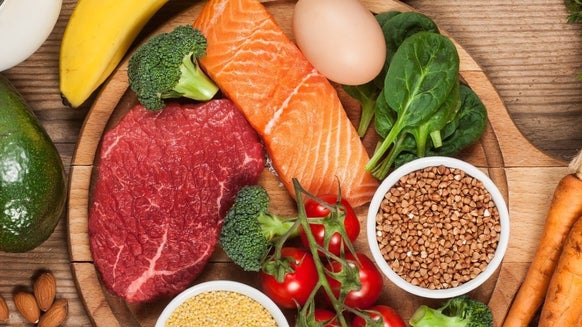
Incorporating healthy fats into your diet is straightforward when you focus on whole-food sources. Here is a guide to help you choose the best options:
| Type of fat | % of daily calories | Grams (2,000kcal diet) | Best food sources |
|---|---|---|---|
| Monounsaturated | 15–20% | 33–44g | Avocados, olives, almonds, peanuts, sesame seeds |
| Polyunsaturated | 5–10% | 11–22g | Chia seeds, flaxseeds, walnuts, tuna, salmon |
| Saturated | <10% | <22g | Butter, fatty meats, cheese, coconut oil |
| Trans | <1% | <1g | Fried fast foods, some packaged baked goods |
Frequently asked questions
Is there a maximum safe limit for fat?
While higher-fat diets like keto exist, most health professionals suggest a cap of 35% of daily calories to ensure you have enough room for protein, fibre, carbohydrates, and essential micronutrients.
What is a healthy amount of fat per 100g of food?
To follow general low-fat guidelines, look for foods with 3g of fat or less per 100g. For a "healthy high-fat" choice, focus on the type of fat (unsaturated over saturated) rather than just the number.
How much fat should I eat for weight loss?
Fat intake for weight loss still usually falls between 20% and 30% of total daily calories. Using a macro calculator can help you find the specific grams based on your calorie deficit.
Can I eat too much healthy fat?
Yes. Because fat is highly calorie-dense at nine calories per gram, eating excessive amounts of even healthy fats like avocado or nuts can lead to a calorie surplus, which may result in unwanted weight gain.
What are the symptoms of not eating enough fat?
A diet that is too low in fat may lead to dry skin, hormonal imbalances, and difficulty absorbing vital fat-soluble vitamins A, D, E, and K.
Take home message
Fats play a wide range of essential roles in our body and provide various benefits to our health. While fat is not the enemy, it's important to choose the healthiest types — prioritising unsaturated sources — and incorporate a variety of whole foods into your diet to make the most of this vital nutrient.

Claire is a Registered Dietitian through the Academy of Nutrition and Dietetics and a board-certified Health and Wellness Coach through the International Consortium for Health and Wellness Coaching. She has a Bachelor of Science in Biology and a Master’s degree in Clinical Dietetics and Nutrition from the University of Pittsburgh.
Talking and writing about food and fitness is at the heart of Claire’s ethos as she loves to use her experience to help others meet their health and wellness goals.
Claire is also a certified indoor cycling instructor and loves the mental and physical boost she gets from regular runs and yoga classes. When she’s not keeping fit herself, she’s cheering on her hometown’s sports teams in Pittsburgh, or cooking for her family in the kitchen.
Find out more about Claire’s experience here.
- Aragon, A. A., Schoenfeld, B. J., Wildman, R., Kleiner, S., VanDusseldorp, T., Taylor, L., … Antonio, J. (2017). International society of sports nutrition position stand: diets and body composition. Journal of the International Society of Sports Nutrition, 14(1). https://doi.org/10.1186/s12970-017-0174-y
- World Health Organization. (2023). Total fat intake for the prevention of unhealthy weight gain in adults and children: WHO guideline. https://www.ncbi.nlm.nih.gov/books/NBK594749/
- National Health and Medical Research Council (NHMRC). (2013). Australian Dietary Guidelines. Eat For Health. https://www.eatforhealth.gov.au/guidelines/australian-dietary-guidelines-1-5
References