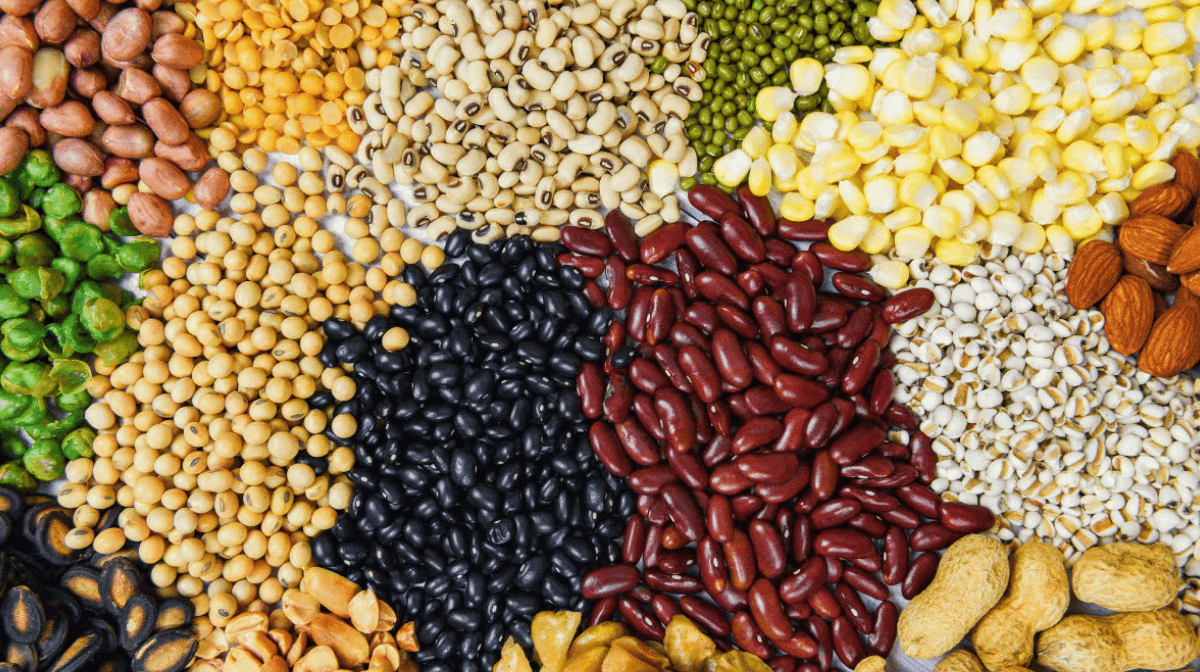
Fibre is one of those things you know you should probably get more of, but you might not be sure why. Often called the "forgotten carbohydrate," fibre plays a role in everything from your digestive health to your body composition.
Fibre is also having a moment online. "Fibremaxxing" is all over social media, with people building gut health bowls and competing to eat as many different plants as possible in a week. Normally, when a nutrition trend blows up online, my job is to talk you down off the ledge. Not this time: fibre is one of the rare cases where the hype and the evidence actually point in the same direction.
Jump to:
- What is fibre?
- Soluble, insoluble and fermentable fibre
- Why is fibre important?
- Do I eat enough fibre?
- How to increase your fibre intake
- The best sources of fibre
- A note of caution
- Frequently asked questions
What is fibre?
Fibre is classed as a carbohydrate, just like sugar or starch. While simple sugars like glucose and fructose are easily absorbed, many common forms of fibre are made of long chains that our bodies cannot digest.
One of the defining features of fibre is that it passes through our digestive system without being absorbed. While some argue this means it isn't essential, think of it like shoes: you don't need them to survive, but life is better with them.
Because we don't digest it, fibre provides unique benefits that you can't get from other nutrients. It plays a role in waste removal, metabolism, and even feeding the "good" bacteria in your gut.
Soluble, insoluble and fermentable fibre
Fibre can be broadly divided into two main types, soluble and insoluble, and some of it is also fermentable. They don't all work the same way in your body, which helps explain why fibre does so much more than just help you poop.
Insoluble fibre
Insoluble fibre doesn't dissolve in water. It comes mostly from whole-grain cereals and products like whole-grain bread, oats, or brown rice, as well as wheat bran and the skins of fruit and vegetables. Its primary job is to help bulk up your stool.
- It stimulates movement in your digestive system to keep things moving.
- This type of fibre is important for preventing constipation.
- It helps your body dispose of metabolic waste products more effectively.
Soluble fibre
Soluble fibre dissolves in water, and some of it forms a gel-like substance in your gut. It's found mostly in fruits, vegetables, and legumes like peas and beans, as well as oats, barley, and fruit like apples and citrus. This is the type mainly responsible for slowing digestion and helping to manage cholesterol.
Fermentable fibre
Some fibre, mostly certain soluble fibres, can be fermented by the bacteria living in your gut. Your body can't digest fibre, but plenty of your gut bacteria can, and when they do, they produce short-chain fatty acids that feed the cells lining your gut.
Most fibre-rich foods contain a mix of different types of fibre rather than just one.
Why is fibre important?
Fibre may not be the "sexiest" topic in nutrition, but its benefits are considerable. Beyond just keeping your digestive system running smoothly, it may support weight management and long-term health.
Weight management and satiety
Focusing on a high-fibre, whole-foods diet may help reduce the amount of food you eat overall. Fibre swells and expands in your digestive system, and by eating more low-calorie, fibre-rich foods like fruit and vegetables, you may naturally eat fewer calorie-dense processed foods.
High-fibre foods tend to have a low energy density, so you get more volume and weight of food for fewer calories. Fibre also swells in your stomach, which physically stretches it and helps to switch on your fullness signals.
There's also evidence that fibre fermentation in your gut can affect certain appetite-related hormones, such as GLP-1, PYY and ghrelin. However, there's very little evidence that this has a powerful effect on how much you actually eat. When it comes to fibre and appetite, the physical effects (more volume, more stretch and slower stomach emptying) are likely doing the vast majority of the work.
There's nothing magic about fibre for weight loss specifically, but it can make maintaining a healthy weight easier as part of an overall diet approach.
Blood sugar and cholesterol
Higher-fibre diets are associated with a reduced risk of insulin resistance (a dulled ability to react to insulin), and people with higher-fibre diets also tend to have lower long-term blood glucose levels, a sign of good glucose control.
Specific fibres, like beta-glucans found in oats and barley, have also been associated with healthier cholesterol levels, as they bind to waste cholesterol in the gut and help prevent it from being reabsorbed.
More specifically, soluble fibres like oat and barley beta-glucan, or the fibre in psyllium husk, bind to bile acids, which your body makes from cholesterol. Instead of being reabsorbed, these bile acids are carried out of your body with your waste. Oat beta-glucan has been shown to lower blood cholesterol, with the beneficial effect obtained from a daily intake of 3g of oat beta-glucan.1 Meta-analyses of randomised controlled trials have also found that psyllium lowers LDL cholesterol.2
The gut microbiome
Your gut microbiome is the environment of different bacteria that live inside you. Eating more fibre, and more varied types of fibre, helps feed these bacteria and allows many potentially beneficial species to survive. These bacteria play roles in your immune response, insulin sensitivity, and digestion.
While we can't digest fibre ourselves, our gut bacteria can digest some of it, turning it into short-chain fatty acids that provide energy for the cells lining your digestive system.
These short-chain fatty acids, such as butyrate and propionate, may also help regulate certain aspects of your immune system.
Fibre and living longer
Put all of that together, and it starts to make sense why higher fibre intake is linked with living longer. One of the largest analyses ever done on fibre, which pulled together almost 135 million person-years of data, found that people eating the most fibre had a 15-30% lower rate of death from any cause compared with people eating the least.3
Do I eat enough fibre?
In Australia, guidelines recommend getting between 25g and 30g of fibre per day. Unfortunately, most Australian adults fall well short, typically averaging around 20g daily.
The reason for this low intake is the massive increase in processed and ultra-processed foods. Many modern manufacturing techniques specifically remove fibre to create refined products.
- White flour is made by stripping fibre from whole wheat.
- White rice is the result of removing the outer layers of brown rice.
- Fruit juice removes the fibre found in the whole fruit.
In the UK, for example, the official recommendation is 30g of fibre a day for adults, but hardly anyone gets close. The most recent National Diet and Nutrition Survey found that UK adults eat around 16g a day on average, and only 4% of adults hit the 30g target.4
It's also worth knowing that the recommended amount isn't necessarily a ceiling. Some of the biggest studies on fibre suggest that the benefits may keep increasing as intake goes up, at least to a point, before the evidence gets thinner at really high intakes.3 If you're already close to your recommended intake, there's a decent argument for pushing a bit higher rather than treating it as a number to stop at.
How to increase your fibre intake
The most important step is to increase the amount of whole foods you eat. You can do this through simple switches and being mindful of your portion sizes.
Make whole-grain switches
Start by switching your daily staples to their less-processed versions. These small changes add up quickly over the course of a day.
- Switch from refined cereals to whole-grain cereals or oats.
- Choose whole-wheat bread over white bread.
- Swap white rice for brown rice, and regular pasta for whole-wheat pasta.
- Try frozen or canned legumes like peas, beans, and lentils, or look out for pastas made from chickpeas, green peas, or lentils.
Use the "cupped hand" rule
If you're not sure what a portion of fruit or veg looks like, use your hand as a guide. A portion is roughly what will fit in your cupped hand.
- Think of a medium apple, a couple of plums, or a handful of berries.
- Aim to have at least two portions of fruit or vegetables at every meal.
- Try to reduce ultra-processed snacks like lollies, cakes, and pastries. You don't need to eliminate them entirely, but eating less of them will make a real difference to your overall fibre intake.
Fibre supplements
If you're struggling to hit your daily targets through diet alone, a fibre supplement can be a convenient way to top up your intake.
Psyllium is one of the most well-studied fibre supplements. It's a soluble, very viscous fibre. But a supplement is a top-up, not a replacement for whole foods, which bring fibre along with vitamins, minerals and other plant compounds that a supplement can't replicate. Always drink plenty of water with a fibre supplement like psyllium.
The best sources of fibre
Not all plant foods are created equal when it comes to fibre. A portion of iceberg lettuce, for example, gives you around 1g at most. If you want to make a real dent in your intake, some foods punch well above their weight.
Legumes
Legumes like lentils, chickpeas, black beans and kidney beans are probably the best-value source of fibre out there. Cooked beans contain roughly 7-8g of fibre per 100g, so half a tin of lentils or black beans can get you close to a third of your daily target in one go. They're cheap, versatile and count towards your protein intake too. Try adding tinned beans, peas or lentils to soups, stews and stir-fries.
Whole grains
The "whole" part matters. Some brown breads are actually a mix of white and wholewheat flour, so check the ingredients list and make sure the first ingredient is wholewheat. Oats and barley are particularly useful, as they contain beta-glucan, the soluble fibre behind the cholesterol-lowering effect above.
Whole fruit and vegetables
Fruit and veg matter too, but it's important to eat them in their whole form. A medium apple with the skin on gives you around 4g of fibre, but if you peel it, you lose almost half of that. Berries are excellent: a cup of raspberries gives you close to 8g, which is a lot relative to their calories. Broccoli, artichokes and Brussels sprouts are some of the highest-fibre vegetables around.
Chia seeds and flaxseed
Chia seeds and ground flaxseed are tiny but very fibre-dense. A single tablespoon of chia seeds packs around 5g of fibre, and they're easy to add to porridge, yoghurt or a smoothie without really noticing them. Grind them first to benefit from the omega-3s they contain as well.
A note of caution
If you currently have a low-fibre diet, add more fibre gradually. It can take time for your digestive system and gut bacteria to get used to the extra work. Increasing your intake too suddenly can cause digestive discomfort, flatulence, or even diarrhoea. Take it slowly to build up your tolerance without the side effects: build up over a few weeks, not a few days.
Make sure you drink plenty of water while you do it too, because fibre relies on water to do a lot of its jobs in your gut.
Important note: If you have any existing digestive conditions, be extra cautious about increasing your fibre intake, as some types of fibre can affect symptoms differently in different people. Always consult with your dietitian before making any major changes to your diet, so you can find the type and amount of fibre that works for you.
Frequently asked questions
What is fibremaxxing?
Fibremaxxing is a term used to describe the practice of intentionally increasing your fibre intake to hit or exceed daily recommended targets. It's less of a trend and more of a sensible approach to eating: prioritising whole, unprocessed foods like legumes, whole grains, and plenty of fruit and vegetables over refined alternatives.
Is it true we can't digest fibre?
Yes, humans cannot digest fibre, but the bacteria in our gut can. They ferment some of it to create short-chain fatty acids, which provide energy for your digestive cells.
How much fibre do I actually need?
You should aim for 25g to 30g per day. For context, some hunter-gatherer populations like the Hadza eat well over 80g per day, so modern guidelines are quite modest by comparison.
Does fibre support gut health?
Yes, a well-fed gut microbiome is one of the most significant benefits of a high-fibre diet. Fibre feeds the beneficial bacteria in your gut, which in turn produce short-chain fatty acids that nourish the cells lining your digestive system.
What are the best sources of fibre?
Legumes like lentils, chickpeas and beans are some of the best-value sources, with roughly 7-8g of fibre per 100g cooked. Whole grains, whole fruit and vegetables with their skins on, chia seeds and ground flaxseed are also excellent choices.
Take home message
Fibre has wide-ranging benefits for your health, potentially affecting everything from insulin sensitivity to your immune response. By making whole-grain switches, adding more legumes and eating more whole fruit and vegetables, you can meaningfully increase your intake. Remember to build up your tolerance gradually, drink plenty of water and focus on variety. Small, consistent changes to your diet can make a real difference to your long-term wellbeing.
Looking for more ways to support your fitness goals? Browse our whey protein supplements:


Dr Richie Kirwan is a Senior Lecturer at Liverpool John Moores University, where his research on muscle mass and cardiometabolic health has influenced health policy across the UK, Ireland and the USA. A leading authority on high-protein diets and resistance training, Richie translates complex science into actionable fitness advice. When off duty, you’ll find him in the gym, on the hurling pitch, or the salsa dance floor.
References
- Whitehead, A., Beck, E. J., Tosh, S., & Wolever, T. M. S. (2014). Cholesterol-lowering effects of oat β-glucan: a meta-analysis of randomized controlled trials. American Journal of Clinical Nutrition, 100(6), 1413-1421. https://doi.org/10.3945/ajcn.114.086108
- Jovanovski, E., Yashpal, S., Komishon, A., Zurbau, A., Blanco Mejia, S., Ho, H. V. T., Li, D., Sievenpiper, J., Duvnjak, L., & Vuksan, V. (2018). Effect of psyllium (Plantago ovata) fiber on LDL cholesterol and alternative lipid targets, non-HDL cholesterol and apolipoprotein B: a systematic review and meta-analysis of randomized controlled trials. American Journal of Clinical Nutrition, 108(5), 922-932. https://doi.org/10.1093/ajcn/nqy115
- Reynolds, A., Mann, J., Cummings, J., Winter, N., Mete, E., & Te Morenga, L. (2019). Carbohydrate quality and human health: a series of systematic reviews and meta-analyses. The Lancet, 393(10170), 434-445. https://doi.org/10.1016/S0140-6736(18)31809-9
- Office for Health Improvement and Disparities. (2026). National Diet and Nutrition Survey 2019 to 2023: report. GOV.UK. https://www.gov.uk/government/statistics/national-diet-and-nutrition-survey-2019-to-2023